There is a moment I keep coming back to.
A close friend of mine runs a major business. High pressure, long hours, always on. We’d spoken a few times about stress, health, and how little time he spent outside.
One day he said to me, “I don’t do forests. Why would I walk in a forest when I could be at the beach having an ocean swim?”
I remember thinking straight away, there is no way I’m taking you to the beach. I’m taking you to the forest.
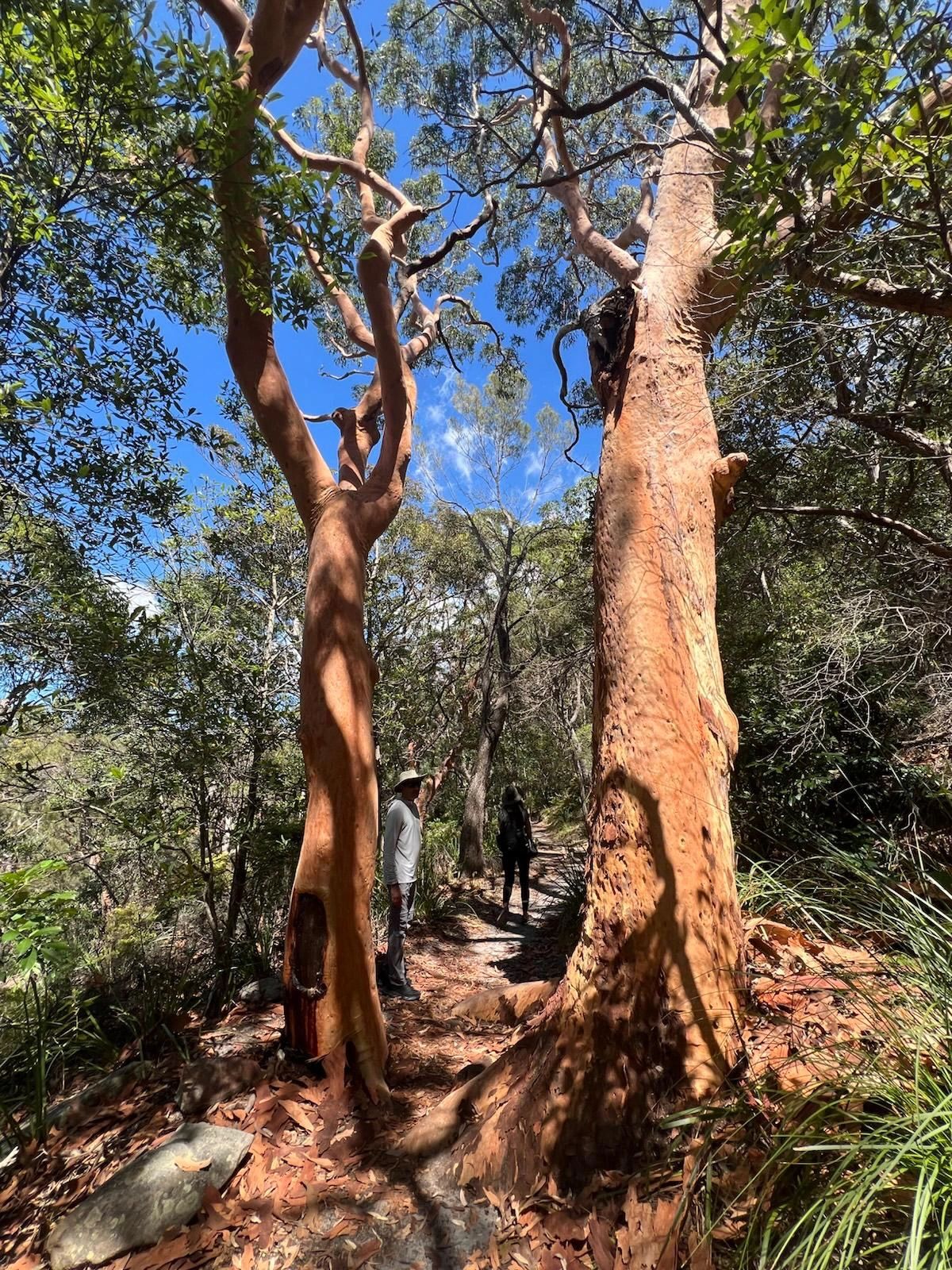
A few weeks later, there he was with me and his family in a rainforest pocket in the Royal National Park, walking through the rain with a huge smile on his face.
I called him a week later and asked how he’d been. He told me he still couldn’t stop thinking about that day. He said he felt so much better after spending time there.
He didn’t do anything.
He just breathed.
That is Phytoncides.
My Story Starts in the Mountains
I grew up in Bratislava, Slovakia, but my roots are in the mountains. Every weekend my father would take us into the forests and up toward the peaks. I learned to ski before I learned to swim. Trees and forests are something I have never been able to stay away from for long.
Almost two decades ago I migrated to Australia. I threw myself into hospitality — managing organic cafes, co-owning a restaurant and catering business for seven years. I loved the people. But the pressure was relentless.
Eventually it took its toll. I began experiencing anxiety, memory loss and the physical symptoms of living with chronically high cortisol for years. I did not realise until later just how long I had been stuck in a permanent state of fight or flight.
Nature brought me back to myself. Not a gym, not a meditation app, not a holiday. The forest. The act of breathing deeply in the presence of trees. It was only later that I discovered there was a name for what was happening inside my body. And science to explain it.
What Are Phytoncides?
Phytoncides are natural organic compounds released by trees and plants into the air around them. The word comes from the Greek “phyton” meaning plant, and “cide” meaning to exterminate. Trees produce these volatile compounds as a kind of immune system, to protect themselves from bacteria, fungi and insects.
But here is the remarkable thing. When we breathe them in, something extraordinary happens to us too.
The most potent sources of Phytoncides are coniferous forests, pine, cedar, cypress, fir. The Japanese Hinoki cypress is particularly well studied. When you walk through a forest and inhale that deep, woody, alive smell of the bush, you are literally breathing nature’s medicine.
That smell after rain? That is Phytoncides at their most concentrated.
What the Science Shows
Since 1982, when the Japanese Ministry of Agriculture coined the term Shinrin-yoku — forest bathing — researchers have been measuring what the forest does to the human body. The findings are extraordinary.
Exposure to phytoncides has been shown to:
These are not small effects. These are measurable, physiological changes happening in your body simply from breathing forest air. Japan now has over 60 certified forest therapy trails and shinrin-yoku is recognised as preventive medicine.
I did not need the research to believe it. I felt it in my own body first. But knowing the science helps me share it with others.
What I See Every Day on the Trail
Now I spend my days guiding people through NSW national parks as a licensed guide and ecotherapist in training. And I watch it happen every single tour.
The executive who cannot stop checking his phone for the first hour. The woman who told me at the start of the day that she “does not really do nature.” The couple who have barely spoken all morning, suddenly talking quietly to each other by a creek.
Something shifts. Every time. And it happens without effort. You do not have to try to benefit from phytoncides. You just have to be there. To slow down. To breathe.
Sometimes it rains. Sometimes there are leeches. Sometimes the track is muddier than expected. And honestly? Those are often the days something shifts most profoundly. Because that is when people stop performing and start actually being somewhere. But that is a whole other story, and another blog post.
What About Those Who Cannot Get to the Forest?
This is the question that changed the direction of my work.
A dear friend of mine was diagnosed with Parkinson’s disease in his 40s. He cannot walk far. He cannot travel easily. Sometimes the anxiety makes leaving the house feel almost impossible. He cannot come to the forest.
So I started asking: how do I bring the forest to him?
Research tells us that exposure to phytoncides through botanical essential oils and forest-derived products can deliver many of the same measurable benefits as being in the forest itself. You do not need to be standing between the trees to receive something of what they give.
This is why I am developing the Phytoncide Project, curating and bringing scientifically backed Phytoncide products to people who cannot access the outdoors. People living with Parkinson’s, dementia, chronic illness, disability. People who deserve access to what nature offers, regardless of what their body allows them to do.
The forest does not ask how fit you are. It does not require anything of you. It just gives.
How Can You Experience Phytoncides Today?
The most powerful way is simply to go into a forest. Not to exercise. Not to get your steps in. But to slow down, breathe deeply, and let the trees do their work. Even two hours a week in nature has been shown to produce significant health benefits.
If you cannot get to a forest as often as you would like, you can bring the forest to you. Diffusing phytoncide-rich essential oils — Hinoki cypress, pine, cedar, Australian eucalyptus — in your home delivers many of the same beneficial compounds you would breathe in a forest environment.
Open a window. Place your feet on grass. Breathe slowly near a tree. These are not small acts. According to decades of Japanese research, they are acts of genuine healing.
A Final Thought
The Japanese have understood this for centuries. The forest is not just somewhere to visit. It is medicine.
We did not evolve in offices. We did not evolve staring at screens. We evolved in forests, surrounded by trees, breathing phytoncide-rich air for thousands of years. When we step back into that environment, something in us remembers.
I see it every day on the trail. The shoulders that drop. The breathing that slows. The quiet that arrives.
That is not nothing. That is everything.
Sabina Laniova is a nature guide, ecotherapist in training and founder of Beyond Guidebook, a licensed NSW National Parks tour company based in Sydney. She is developing the Phytoncide Project, bringing the healing power of nature to people who cannot access the outdoors. Learn more at sabinalaniova.com.au Forest healing Forest healing Forest healing
READY FOR A NEXT STEP?
Explore guided experiences or send Sabina a note to find the right path for you.